
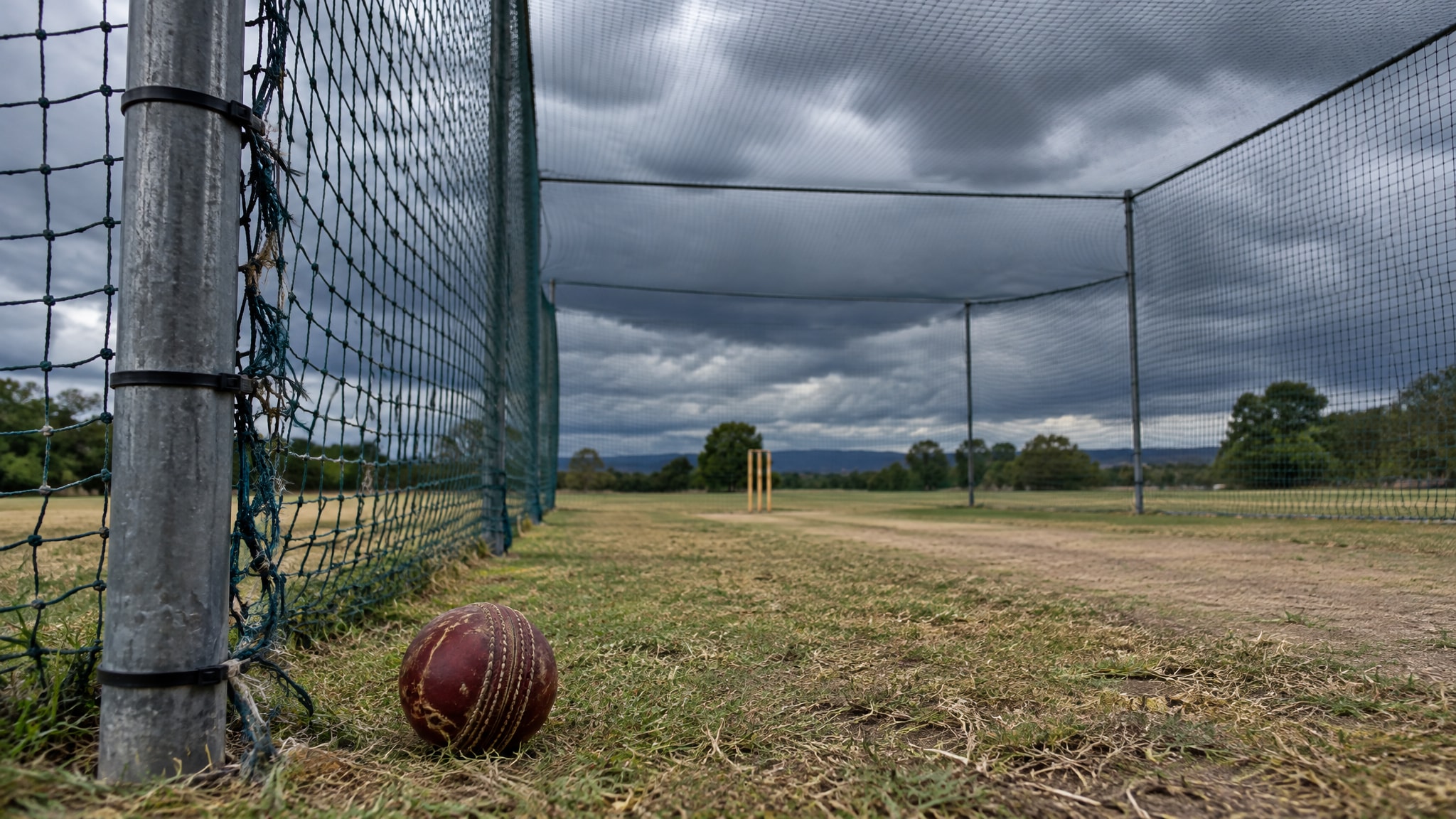
It's early November, the club season is under way, and the afternoon sky over the Highveld is already building. If you've had a Tuesday net session washed out in the last fortnight, you know why the choice between indoor vs outdoor cricket net practice matters.
The short answer is that neither setting wins everywhere. Indoor nets suit controlled technique work. Outdoor nets suit match realism. This piece treats it as a decision you make session by session, not a verdict, and it ends with a simple rule for when to switch.
How indoor and outdoor cricket net practice differ
Indoor nets are enclosed. Outdoor nets are open to sun, wind and rain. That is the first difference any player notices, and most of the others follow from it.
Inside, the roof and walls remove the variables. The light is the same at 5pm as at 7pm, the wind doesn't push the ball off line, and the surface behaves the same way from the first delivery to the last. Outside, every one of those things changes, sometimes mid-over.
Neither is the "real" cricket and the other a poor copy. They train different things. A controlled setting lets you repeat one movement until it sticks, while an open one tells you whether that movement survives conditions you can't control.
Weather and cricket training through a South African year
Weather is the main reliability gap between the two settings. You can plan an outdoor session perfectly and still lose it to the sky, whereas an indoor lane runs whatever happens outside.
Summer storms and rain-outs
Highveld summer afternoons often bring thunderstorms, and they tend to arrive in exactly the hours when club cricketers are free. A session planned for after work or after school can be cancelled at short notice, or cut short once the first rumble of thunder sends everyone to their cars.
For a squad organiser, that is the real headache. Eight players have rearranged their evening, a few have driven across town, and the net is unusable. Two or three of those in a month and the warm-season build-up you planned has holes in it.
Indoor lanes sidestep the problem because the roof does the work. A booked hour stays an hour of cricket.
Winter light and year-round cricket practice
Winter is the drier half of the year, so rain stops being the main enemy. Daylight takes its place. Dusk comes early, mornings are cold, and an after-work outdoor session can be over before you've warmed up properly.
That squeezes the window for anyone who works or studies during the day. Early-morning nets mean cold hands and stiff shoulders, which isn't the time to be working on a delicate technical change.
Indoor lanes give you year-round cricket practice on a fixed schedule: lit, dry and warmer than a Highveld morning in July. They don't make winter nets as warm as summer ones, but they do mean the dark evening stops being a reason to skip.
Surface differences: bounce and pace
Indoor surfaces are typically more consistent. The ball comes off the same patch in much the same way, delivery after delivery, which is exactly what you want when you're trying to judge whether a change to your stance or footwork is working.
Outdoor pitches behave differently. They shift with wear, moisture and heat, so bounce and pace can vary within a single session. A net that is a little damp at the start may be quicker and more uneven an hour later, once the sun has been on it and a few dozen deliveries have scuffed the length.
That variation is a nuisance when you're rebuilding a shot, because you can't tell whether a mistimed drive was your fault or the surface's. It is useful when you're preparing for a match, because match pitches do the same thing.
Neither surface is more honest than the other. If you want to know how a technique holds up against unpredictable bounce, you need the unpredictable surface.
Skill focus: what each setting builds best
Indoor practice builds technique through controlled repetition. Outdoor practice tests that technique under match-like conditions. Each setting develops a different skill, and the best practice plans use both in the right order.
The benefits of indoor cricket practice for technique
The main benefit of indoor cricket practice is that you can change one thing at a time. Fixed targets, repeated drills and a surface that doesn't surprise you let a player groove a new movement, check it, and groove it again.
Take a typical case. A junior batter keeps playing at deliveries outside off stump. In an indoor lane, they can repeat one fixed drill, leaving the ball or playing straight, until the movement feels automatic. Only then do they take it outdoors and see whether it holds against real bounce.
Common coaching practice follows the same logic: a controlled, repeatable setting is where you change a technique, and open, match-like conditions are where you check that the change holds.
Repetition alone doesn't guarantee improvement, though. Someone who repeats a flawed movement 200 times gets very good at the flaw. A coach watching and correcting is what turns indoor repetition into a good habit, which is why choosing a coach for a junior player matters as much as choosing the venue.
Indoor lanes also have a limit. Run-ups are often shorter indoors, so fast bowlers may not get their full approach, rhythm and follow-through. If you bowl quick, you still need outdoor time.
Where outdoor net practice still earns its place
Outdoor net practice gives you things no roof can: real bounce, wind, natural light and the feel of a proper outdoor surface under your feet. Judging a high catch against a bright sky is a different skill from judging one under strip lights.
It is also the right place to check a change before match play. A technique that looks tidy in an indoor lane can fall apart when the ball seams, the sun is in your eyes or the pitch has gone slow. Better to find that out on a Thursday evening than on Saturday.
Fast bowlers get the most from the outdoors for the reason above: the full run-up. So do captains and coaches who want to see their players handle the conditions they'll actually face.
Cost comparison: paying for sessions that actually happen
The cheapest session is the one you didn't pay for and didn't use. Judge cost per session that actually happens, not by the hire fee alone. This matters most for parents budgeting a season and club organisers planning squad sessions.
The structures differ. Indoor lanes are paid per booking. Outdoor club or school nets are often covered by a membership or school fee, which makes them feel free at the point of use.
Feeling free and being free are different things, though. Money you've already paid for a net you can't use is money spent on nothing.
Counting rain-outs and travel, not just the fee
Here's the cost logic with no figures needed. Suppose several planned outdoor sessions in a month are rained off or cut short. The fee for the season hasn't changed, but the number of productive sessions has dropped, so each session that actually happens costs you more. A booked indoor lane can then be the cheaper route to a productive hour.
Travel adds to the outdoor bill too. Petrol and time spent driving to a ground that turns out to be waterlogged are costs, even if they never appear on an invoice.
This doesn't mean indoor always costs less. If the weather holds and your club nets are close and covered by your fee, outdoor is likely the better value. To see the full spend beyond sessions, including the coaching itself, read up on what coaching costs in South Africa.
Practice facility options in Gauteng
You have more choice than "the club net or nothing". In Gauteng the realistic practice facility options are indoor lanes, indoor bowling machine sessions, club or school outdoor nets and home nets, and each one suits a different goal.
Local indoor lanes compared with club and home nets
Indoor lanes suit anyone who wants a dry, lit, bookable hour. They're the practical choice for technique rebuilds, for squads that need a guaranteed slot, and for winter evenings.
Indoor bowling machine sessions suit batters who want repeated deliveries on a similar line and length without needing a bowler. They're good for drilling one scoring area, but a machine can't replicate a bowler's variation or the way a spinner changes pace.
Club or school outdoor nets suit players who want match realism and the company of a squad. They're often covered by a fee, but they come with the weather risk and whatever schedule the club sets.
Home nets suit juniors who need a few minutes of practice every day. They're the cheapest way to build repetition, though they depend on space, and few gardens allow a proper run-up.
None of these is the single winner. A junior working on a technique might use a home net on weekdays, an indoor lane every second week and the club net before matches.
If you're also deciding who should coach you, academy or club coaching in Randburg is worth comparing before you commit to a facility.
When to switch between indoor and outdoor cricket net practice
Use a simple rule. Move indoors to build or repeat a change. Move outdoors to test it under match-like bounce, full run-ups and natural light.
Over a season, that becomes a rhythm. Indoor sessions cover poor weather and dark evenings, and outdoor time returns as the season approaches and match preparation begins.
Signals to move indoors
Head indoors when any of these apply:
- The forecast shows storms for the hours you'd normally practise.
- Daylight will be gone before you finish.
- You're rebuilding a grip, stance or bowling action and need the same delivery again and again.
- Your coach wants clean feedback without the surface muddying it.
If you've only just started a change, the first few sessions should almost always be indoors. The movement needs to become automatic before you test it against anything unpredictable.
Signals to get back outdoors
Return outdoors when the change feels natural without thinking. By then, repetition has done its job, and the only question left is whether the change works in a match.
A few more cues: your next fixture is within a couple of weeks, you're a fast bowler who needs the full run-up, or you want to judge the ball in natural light. At that point a few outdoor sessions will show you what the indoor lane couldn't.
If you're weather-bound or in the middle of a technique rebuild, the next step is to book an indoor net lane in Gauteng through PlayCricket. If you're in the Randburg area, the page for lane hire in Randburg is the place to book your first session.
Frequently asked questions
Is indoor cricket net practice good enough on its own?
For technique work, yes, because the consistent surface lets you repeat and refine a movement. It isn't enough on its own for match preparation, since you won't face variable bounce, wind or natural light. Fast bowlers in particular need some outdoor time for a full run-up.
Should I practise indoors or outdoors in the Gauteng summer?
Plan for both. Afternoon thunderstorms can cancel an outdoor session at short notice, so an indoor lane is the safer choice when storms are forecast. On clear days, outdoor nets give you the match-like conditions you'll face on Saturday.
Why do outdoor nets feel different from indoor lanes?
Outdoor pitches change with wear, moisture and heat, so bounce and pace can shift within one session. Indoor surfaces are typically more consistent. Wind, sunlight and a longer run-up add to the difference.
How do I know whether an outdoor session is really cheaper?
Count the sessions that actually happen, not just the fee. If rain-outs and cut-short sessions cut your usable hours, each one costs more, and travel adds to that. A booked indoor lane can then work out cheaper per productive hour.
When should a junior batter move from indoor to outdoor nets?
Move once the new movement feels automatic in the indoor lane. Then test it outdoors against real bounce before the next match. If it breaks down there, go back indoors and keep working on it.